The condo debt-free letter (juristic person certificate), explained
Before a Thai condo can change hands, the building's juristic person must certify the unit carries no unpaid charges. Here is what that debt-free letter covers and why it gates the transfer.
Reviewed by TransferDueLast reviewed 11 June 2026
Know what the debt-free letter certifies
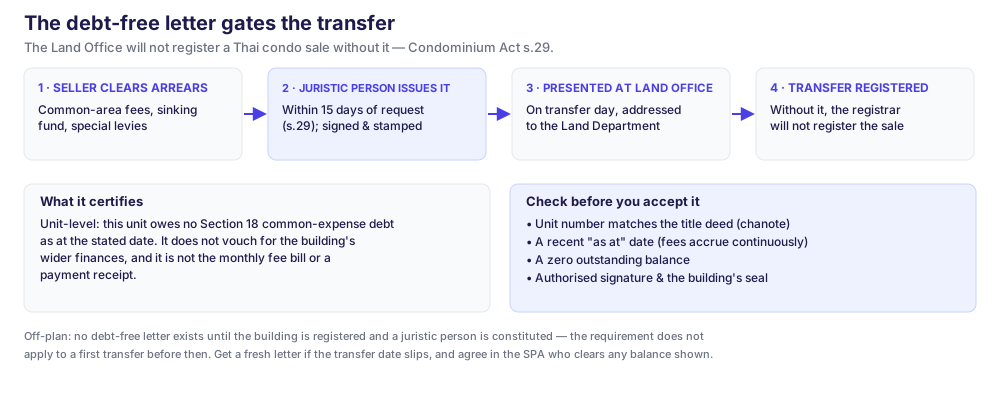
A debt-free letter (หนังสือรับรองการปลอดหนี้) is a certificate issued by the condominium's juristic person — the legal body that manages the building and collects common-area fees. It certifies that the specific unit owes no outstanding common-area fees (ค่าส่วนกลาง) as at the date stated on the letter; in practice the juristic person also requires the sinking-fund account and any other charges to be clear before it will issue one.
It is a unit-level certificate, not a building-level one. It confirms this unit's account is clear — it does not guarantee the building's broader finances are healthy or that the juristic person has no other liabilities.
Understand why it gates the Land Department transfer
The Land Department will not register a transfer of a condo unit without a current debt-free certificate from the juristic person. The legal basis is Section 29 of the Condominium Act, which bars the registrar from registering the transfer unless the juristic person certifies the unit is free of outstanding common-expense liabilities (the charges under Section 18). Once any arrears are paid, the manager must issue the certificate within 15 days of a request.
In practice the seller obtains the letter shortly before the agreed transfer date and presents it at the Land Office on the day. The letter is addressed to the Land Department and signed and stamped by the juristic person. Without it, the transfer cannot be registered.
Distinguish the letter from the monthly fee bill
The debt-free letter is not the same as the monthly common-area fee statement (ใบแจ้งหนี้ค่าส่วนกลาง). The fee bill shows what the unit is charged each period and whether there are arrears. The debt-free letter is the juristic person's formal certification — signed and stamped — that as at a specific date nothing is owed.
A seller can show a paid receipt for the current month and still have other amounts outstanding — sinking-fund arrears, special assessments, or administrative charges. The debt-free letter is the document that settles the question for the Land Department, not the fee bill or a payment receipt.
Check the letter's freshness
The 'as at' date on the letter matters. A letter dated weeks before the transfer date may not reflect charges that accrued in the interval — fees billed mid-month, a special levy raised after the letter was issued, or an administrative charge added later. Common practice is to obtain the letter within a few weeks of the transfer date.
If the transfer date slips, or if there is a significant gap between the letter date and the transfer date, request a refreshed letter from the juristic person. Some juristic persons charge a fee to issue or reissue the letter; confirm in the SPA which party bears that cost.
Verify the letter's details against the title deed
Before accepting the letter, check that the unit number on the letter matches the unit number on the title deed (chanote) exactly. Check that the owner name matches the seller. Confirm the letter states a zero outstanding balance. Verify the juristic person's name, address, stamp, and the signature of an authorised officer.
A discrepancy between the unit number on the letter and on the chanote is a material error that can block registration at the Land Office. Flag any discrepancy to the juristic person immediately so it can be corrected before transfer day.
Handle an off-plan purchase where no letter exists yet
For an off-plan purchase, there is usually no debt-free letter at the time of the reservation agreement or the SPA signing, because the building has not yet been registered as a condominium and no juristic person has been constituted for the project.
The debt-free letter only becomes relevant when the building is completed, registered under the Condominium Act, and a juristic person is established. At that point the buyer's unit will have a common-area fee account. The Act reflects this — the debt-free requirement does not apply to a transfer registered before the condominium juristic person exists. Verify the debt-free letter when the project approaches its transfer stage, not at the contract-signing stage.
Spot red flags and act on any balance shown
Red flag: a letter dated more than a month before the transfer date with no updated letter available, or a seller who says the old letter 'will do'.
Red flag: a letter listing outstanding charges that the seller says will 'sort themselves out' without a written commitment to clear them before transfer.
Red flag: a letter stamped or signed by someone other than the juristic person's authorised committee member or manager. If a balance is shown on the letter, agree in writing — in a signed SPA addendum or as a condition at the Land Office — who clears it, by when, and what happens if it is not cleared by transfer day. Normally the seller clears arrears as a condition of transfer.
Frequently asked questions
- Who issues a condo debt-free letter?
- The condominium's juristic person — the body that manages the building and collects common-area fees. It certifies to the Land Department that the unit owes nothing as at the letter's stated date.
- Is the debt-free letter the same as the maintenance-fee bill?
- No. The fee bill shows the unit's charges and any arrears for the billing period. The debt-free letter is the juristic person's formal, signed, and stamped certification that no charges remain outstanding as at a stated date. The Land Department requires the latter to register a transfer.
- What if the unit has unpaid common-area fees?
- The juristic person will not issue a clear letter, and the Land Department will not register the transfer, until arrears are settled. Agree in writing — typically as a clause in the SPA — that the seller must clear the balance before transfer day.
- How old can the debt-free letter be?
- None is set by law — the Land Department confirms the Condominium Act fixes no validity period, so the letter is good for whatever window it states. In practice juristic persons commonly stamp a validity of roughly 7 to 30 days, with a week or two typical. Obtain it close to the transfer date and have the seller request a fresh letter if the date slips.
- Does the juristic person charge a fee to issue the letter?
- Many juristic persons charge an administrative fee to prepare the debt-free letter; the amount varies by building and is set by the juristic person, not by law. Confirm in the SPA which party bears this cost. By convention it is often the seller's cost, but the SPA governs.
- What if the seller cannot get a clean debt-free letter in time for transfer?
- Transfer cannot proceed without a clean letter — the Land Office will decline to register. If outstanding charges prevent it, the SPA should specify that the seller must clear all arrears as a condition of transfer and that the date adjusts accordingly. Without such a clause, the buyer may need to treat the uncured defect as a default by the seller.