Condo due diligence in Thailand — what to check before signing
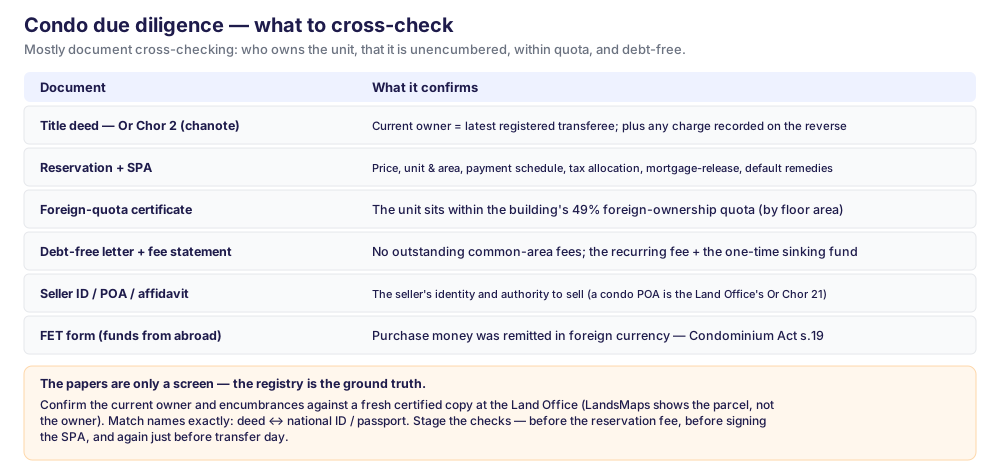
Due diligence on a Thai condo is mostly document cross-checking: confirming who owns the unit, that it is unencumbered and within quota, and that the contract says what it should. Here is the core set.
Reviewed by TransferDueLast reviewed 11 June 2026
The title deed and who really owns the unit
Start with the unit title deed — for a condo this is the unit ownership certificate (Or Chor 2), often loosely called a chanote. It first issues in the owner's name at registration, which for a new building is usually the developer. Each later sale is entered in the deed's registration record (the transfer ledger on a later page), so the current owner is the most recent registered transferee there — which may differ from the name the deed first carried.
So 'whose name appears first' is not the question; 'who is the last registered transferee' is. Confirm that person matches the seller's ID exactly.
Encumbrances and mortgages
Check the back of the deed for registered charges — a mortgage, a registered lease, a sale with right of redemption (ขายฝาก, khai fak), a court seizure or attachment (อายัด), a servitude, or a usufruct. A unit can be sold while mortgaged, but the loan must be cleared at the Land Office on transfer day, and the SPA should require that release. An undisclosed mortgage changes the deal.
The non-mortgage entries matter just as much: a registered lease survives the sale and binds you as the new owner for its remaining term; an unredeemed ขายฝาก means the registered owner's title is conditional until the redemption period runs out; and a seizure (อายัด) blocks any transfer until the authority that ordered it lifts it. If any of these rows appears without a later entry discharging it, resolve it before money moves.
Foreign-ownership quota
If you are a foreign buyer, the unit must sit within the building's 49% foreign quota. Get the juristic person's quota certificate confirming it, and plan how you will bring funds in from abroad so you can obtain the bank's FET form for registration.
The juristic person: debt-free and fees
Obtain the debt-free letter certifying the unit owes no common-area charges — the Land Department requires it to register the transfer — and the fee statement showing the recurring common-area fee and any arrears. Confirm the ongoing monthly fee and the one-time sinking fund.
The contract and the people
Read the SPA for the deposit and its refundability, the transfer date, the mortgage-release clause, who bears each transfer tax and fee, the foreign-quota-failure clause, and the default remedies.
Confirm the seller's identity and authority — a company seller (via its affidavit and the resolution authorising the sale), an attorney acting under a power of attorney (for a condo unit this is the Land Office's Or Chor 21 form; Tor Dor 21 is its land-and-house equivalent), or an estate administrator selling through probate. Cross-checking the deed, the contracts, and the IDs against each other is the heart of due diligence.
Match names exactly, not approximately. A Thai owner's name on the deed should match the Thai national ID character for character; a foreign owner's name is a transliteration of the passport, so compare it against the passport itself and query any difference beyond spacing or romanisation style. A mismatch is not automatically fraud — names change at marriage, and transliterations vary — but every mismatch needs a documented explanation, such as a name-change certificate, before you pay.
Verify against the registry, not just the paperwork
Everything above checks the papers the seller gave you; the registry is the ground truth. The free LandsMaps portal (landsmaps.dol.go.th) is a useful pre-check for a land parcel — shape, area, appraised value — but it does not show the owner or encumbrances, so it cannot confirm the facts that matter most.
The authoritative record is the registration held at the Land Office where the unit is registered. An up-to-date certified copy of the deed and its registration ledger shows the current owner and any registered encumbrance as of today — not as of whenever the seller's photocopy was made. If you cannot attend the office yourself, a Thai lawyer or conveyancer can obtain it. Treat any document-only check, including an automated one, as a screen that tells you what to verify — not as a substitute for the registry.
Stage the checks across the deal
Before paying a reservation fee: see at least a copy of the title deed, confirm the seller's name against the latest registered transferee, and — if you are foreign — ask the juristic person about quota headroom.
Before signing the SPA: assemble the full set — the deed including its back page, the debt-free letter and fee statement, the quota confirmation, and the seller's identity or authority documents — and cross-check them against the contract's parties, unit details, and price. Plan how the purchase funds will arrive so the bank can issue your FET form.
Before transfer day: get a fresh debt-free letter dated close to the transfer, confirm any mortgage release is booked for the same Land Office appointment, and re-verify the seller's ID against the deed one final time. Spreading the checks across these three gates costs nothing and catches problems while you can still walk away cheaply.
Frequently asked questions
- What does due diligence on a Thai condo actually involve?
- Mostly cross-checking documents: confirming the current registered owner on the title deed's transfer ledger matches the seller, the unit is unencumbered and within the foreign quota, the juristic person certifies it debt-free, and the SPA's terms are sound.
- Who is the real owner of a condo unit on a chanote?
- The current owner is the most recent registered transferee in the deed's registration record (transfer ledger), which may differ from the name the deed first carried at issuance — often the developer's. Match the latest registered owner, not the first, against the seller's ID.
- What documents should I cross-check?
- The title deed, the reservation agreement and SPA, the foreign-quota and debt-free letters, the seller's ID (or company affidavit, power of attorney, or probate order), and — for funds from abroad — the FET form. Comparing them confirms ownership, encumbrances, quota, and terms.
- Is checking the documents enough, or do I need a Land Office search?
- Document checks are the screen; the Land Office registration is the authoritative record. LandsMaps shows a parcel's shape, area, and appraised value but not the owner or encumbrances — so for the facts that matter most, get an up-to-date certified copy of the deed and its ledger from the Land Office, or have a Thai lawyer obtain it, before transfer.