What is a chanote (title deed) in Thailand?
The chanote is the highest form of land title in Thailand. Before you sign for a condo, it pays to know what the deed shows, how it differs from weaker titles, and what to cross-check on it.
Reviewed by TransferDueLast reviewed 9 June 2026
What a chanote is
A chanote (Nor Sor 4 Jor) is the highest form of land title deed in Thailand, issued by the Land Department with a unique parcel number and GPS-surveyed boundaries. It confers full ownership of the land it describes.
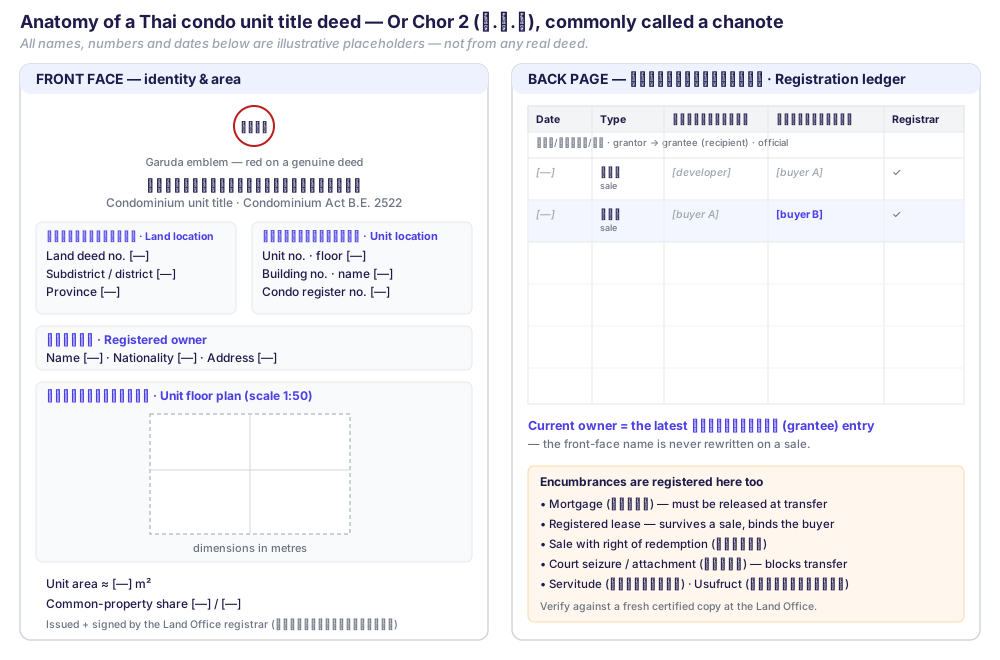
It is the title type that underlies most registered condominium developments. The condo building stands on chanote land, and each unit is registered under the Condominium Act with its own unit ownership certificate — the Or Chor 2 (อ.ช.2), often loosely called a chanote — that records the unit's floor area and its share of the common property.
What the deed shows
A genuine chanote carries the red Garuda emblem at the top (weaker titles carry a green or black one). It records the registered owner's name, the parcel (plot) number, the surveyed land area, and the location. Crucially, the back of the deed carries the registration record (สารบัญจดทะเบียน) — a single ledger holding both the chain of transfers, whose most recent ownership entry is the current owner, and every registered charge against the property: a mortgage, a lease, a sale with right of redemption (ขายฝาก), a court seizure (อายัด), a servitude, or a usufruct.
For a condominium unit, the unit ownership certificate (Or Chor 2) also states the unit's floor area and its share of the common property; the floor area feeds the building's 49% foreign-ownership quota calculation.
How to verify a chanote
Confirm the current registered owner on the deed matches the seller's national ID or passport exactly. A mismatch — or a recent transfer — is worth a closer look before money changes hands.
Check the encumbrance record on the reverse for any mortgage or charge. A unit can be sold while mortgaged, but the loan must be cleared at the Land Department on transfer day; an undisclosed mortgage changes what you are agreeing to.
The most reliable check is at the Land Office that issued the deed. The office holds the master copy, and the owner's copy should match it field for field. For a preliminary check, the Department of Lands' free LandsMaps service (landsmaps.dol.go.th) returns a parcel's shape, location, area, and appraised value from its deed number — but it shows the land, not the owner or any encumbrance, so it complements rather than replaces the in-person search. Cross-checking the deed against the reservation agreement, the sale and purchase agreement (SPA), and the seller's ID is the core of condo due diligence.
Chanote versus weaker title types
Thailand also issues lesser documents — such as Nor Sor 3 Gor, a certificate of use (a confirmed right of possession, surveyed by aerial photograph rather than GPS-staked corners) rather than a surveyed freehold title. These can be upgraded to a chanote over time, but they carry less certainty about exact boundaries and ownership.
For a condominium purchase you should expect the development to sit on chanote land and the unit to come with a registered unit title deed. Anything less is a reason to ask more questions.
Common red flags
Watch for a name on the deed that does not match the seller, an encumbrance the seller did not disclose, a unit area that differs between the deed and the SPA, or a development that cannot show clear title to the land it is built on. Each is a question to resolve in writing before you commit.
Frequently asked questions
- Can a foreigner own a condo on a chanote in Thailand?
- Yes. A foreign buyer can own a condominium unit outright, provided foreigners hold no more than 49% of the total floor area of all units in the building. The building's juristic person can confirm the current foreign-ownership quota in writing.
- How is a chanote different from a debt-free letter?
- They are separate documents. The chanote is the land/unit title deed showing ownership and encumbrances. The debt-free letter is a certificate from the condominium's juristic person confirming the seller owes no outstanding common-area fees; the Land Department requires it before it will register a transfer.
- Which documents should I cross-check against the chanote?
- The reservation agreement, the sale and purchase agreement (SPA), the juristic person's debt-free letter, and — for foreign buyers funding from abroad — the Foreign Exchange Transaction Form (FET). Comparing them confirms ownership, encumbrances, the foreign-ownership quota, and payment terms.