Thailand's 49% condo foreign-ownership quota, explained
A foreigner can own a Thai condo unit outright, but only within the building's foreign quota. Here is what the 49% rule actually measures and how to confirm a specific unit qualifies.
Reviewed by TransferDueLast reviewed 9 June 2026
What the 49% rule is
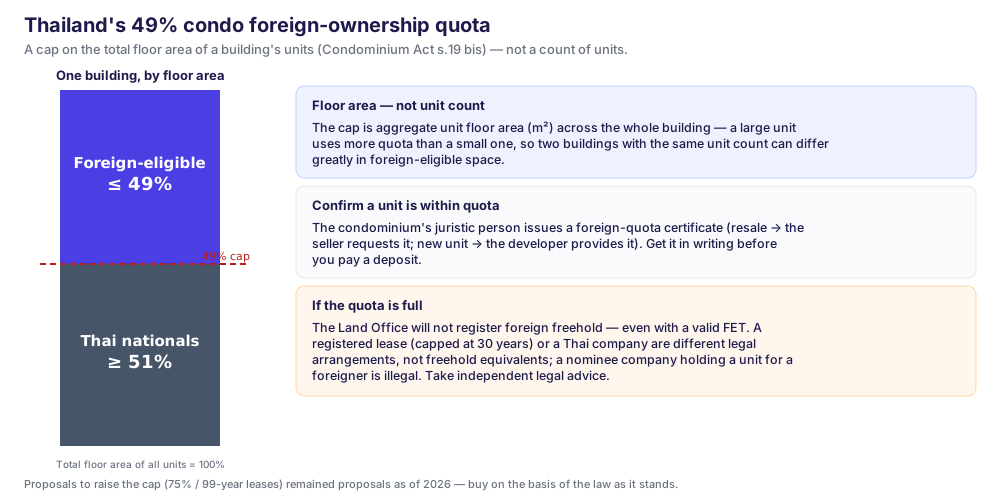
Under the Condominium Act (section 19 bis), foreigners may collectively own no more than 49% of the total floor area of all units in a registered condominium building. The cap is on aggregate floor area, not the number of units; the balance is held by Thai nationals or qualifying Thai entities.
This rule is what lets a foreign buyer take freehold title to a condo at all — it is the statutory space within which foreign ownership is registered at the Land Department.
Floor area, not unit count
The quota is measured in square metres of unit floor area across the whole building, so two buildings with the same number of units can have very different amounts of foreign-eligible space. A building already near its 49% ceiling may have no foreign quota left even though units are for sale.
Practically: a unit marketed to you is only available on foreign freehold if the building still has quota and that unit is allocated within it.
How to confirm a unit is within quota
The building's juristic person — the condominium's management body — issues a foreign-quota certificate confirming the unit falls within the 49% allocation. For a resale the seller obtains this letter from the juristic person; for a new unit the developer provides it.
Ask for the quota confirmation in writing before you pay a deposit. Without remaining quota, the Land Department will not register the unit in a foreigner's name as freehold.
What happens if the quota is full
If a building is at its foreign-ownership ceiling, the unit cannot be registered to a foreigner as freehold. Buyers are sometimes offered alternatives — a registered leasehold, or ownership through a Thai company — each with very different legal and tax consequences. These are not equivalents to freehold. A registered lease is capped at 30 years, and a 2025 Supreme Court ruling held that a pre-agreed 'automatic' renewal does not bind a later owner. Using a Thai company with nominee shareholders to hold a unit for a foreigner is an illegal nominee arrangement under the Foreign Business Act and Land Code — the subject of active 2025–2026 enforcement — with criminal exposure. Take independent legal advice before considering either.
Proposals to change the rule are not yet law
The 49% cap is sometimes reported as about to rise. In 2024–2025 the government floated raising the foreign-ownership ceiling to 75% and introducing 99-year leasehold-style rights. As of 2026 both remain proposals under consideration — neither has been enacted. The 49% floor-area cap and the 30-year limit on an ordinary registered lease are the rules that apply today, so buy on the basis of the law as it stands, not a proposed change.
How the quota connects to your other documents
The quota certificate sits alongside the title deed (chanote), the sale and purchase agreement, and — for funds sent from abroad — the Foreign Exchange Transaction (FET) form. Together they let the Land Department register a foreign buyer's ownership.
A unit can clear every other check and still be unbuyable on freehold if the quota is gone, so confirm it early.
Frequently asked questions
- Is the 49% quota based on the number of units or floor area?
- Floor area. Foreigners may own up to 49% of the combined floor area of all units in the building; it is not a count of units. Units of different sizes consume different shares of the quota.
- Who issues the foreign-quota certificate?
- The condominium's juristic person — its management body. For a resale the seller requests the letter; for a new unit the developer provides it. The Land Department needs it to register foreign ownership.
- What if the building's foreign quota is already full?
- The unit cannot be registered to a foreigner as freehold. Buyers are sometimes offered a leasehold or a Thai-company structure instead — different legal arrangements with their own risks (a lease is capped at 30 years; a nominee company holding a unit for a foreigner is illegal), worth independent legal advice before committing.